Wow what an incredible wrap up to the expedition! We started off at sunrise with an amazing breakfast (the tamales were so delicious) on the boat with a birding tour of the canals along the Chinampas. With the fantastic Martin Sanchez-Vilchis as our guide we were able to identify over 25 different species of water birds that live in the Xochimilco area.
Martin on our tour of the water areas along the canal.
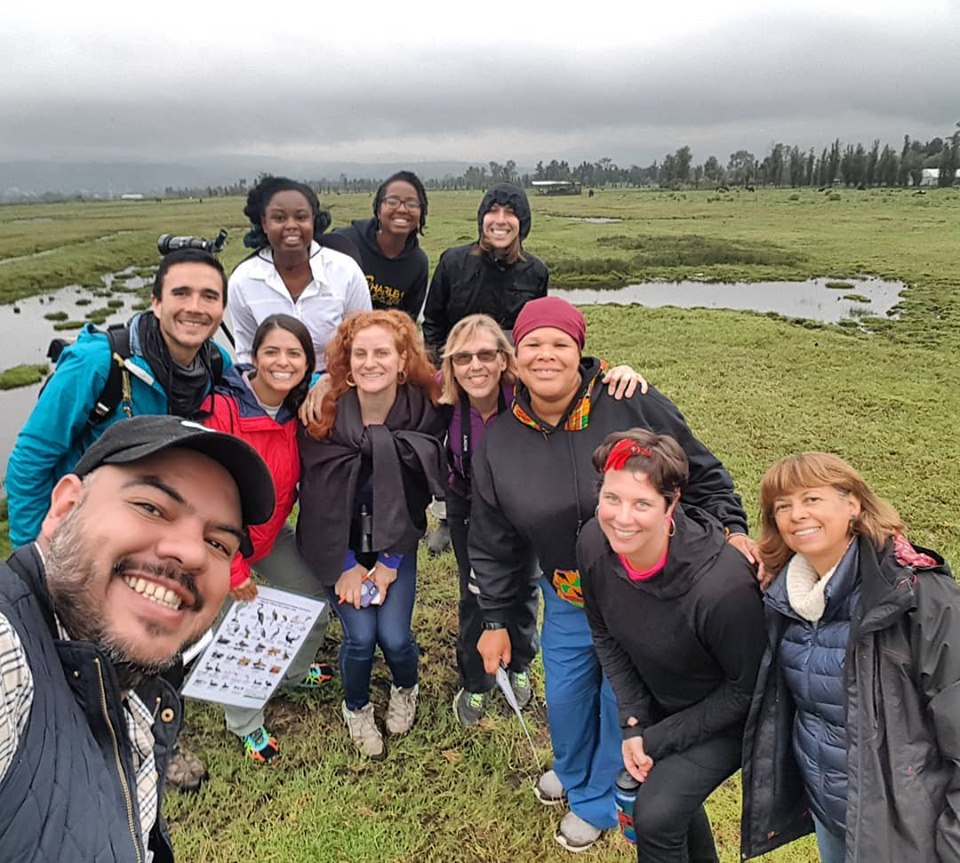
Our group with Martin
Our group at one of the birding areas!
Next was a tour of the REDES (Restauración Ecológica y Desarrollo) Chinampa with Francisco and Renato. The Chinampa uses only sustainable practices to grow a large number of different produce. It also has a dry toilet which is able to compost waste and use as a fertilizer for ornamental plants and on orchards after storing the waste for a 9 month period. This project is being implemented within the Chinampas to eliminate waste going into the waterways and crops.
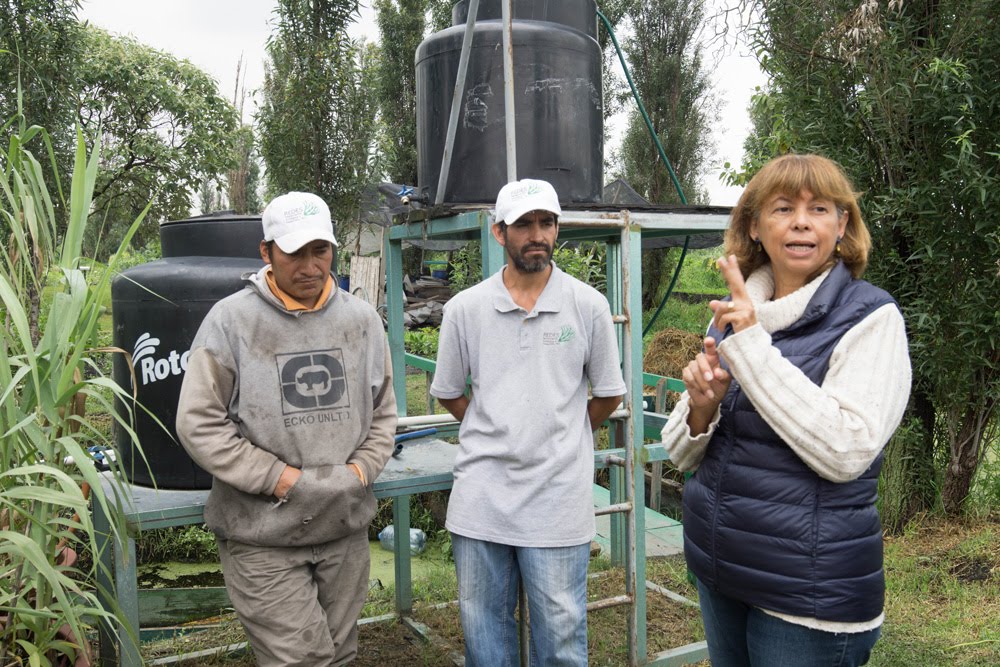
Renato, Francisco and Elsa (Director of REDES and our Earthwatch facilitator). explaining the water filtration system.
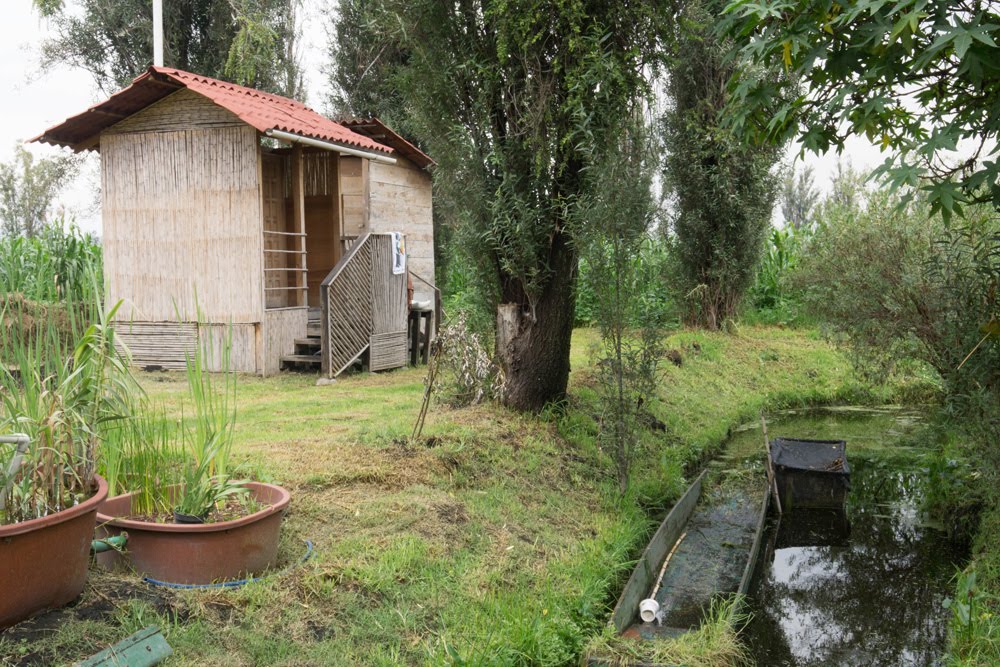
The Chinampa dry toilet.
It was a three seater!
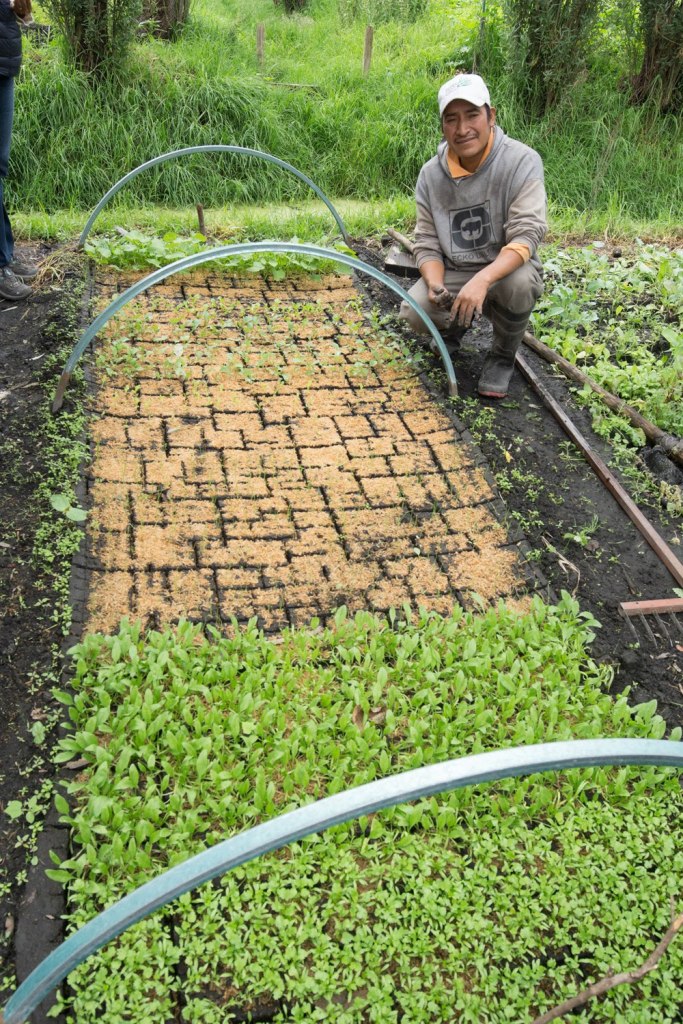
Renato then explained how crops are started, rotated and composting strategies used in the Chinampa.
Start of the crop beds with soil sediment taken from the canal.
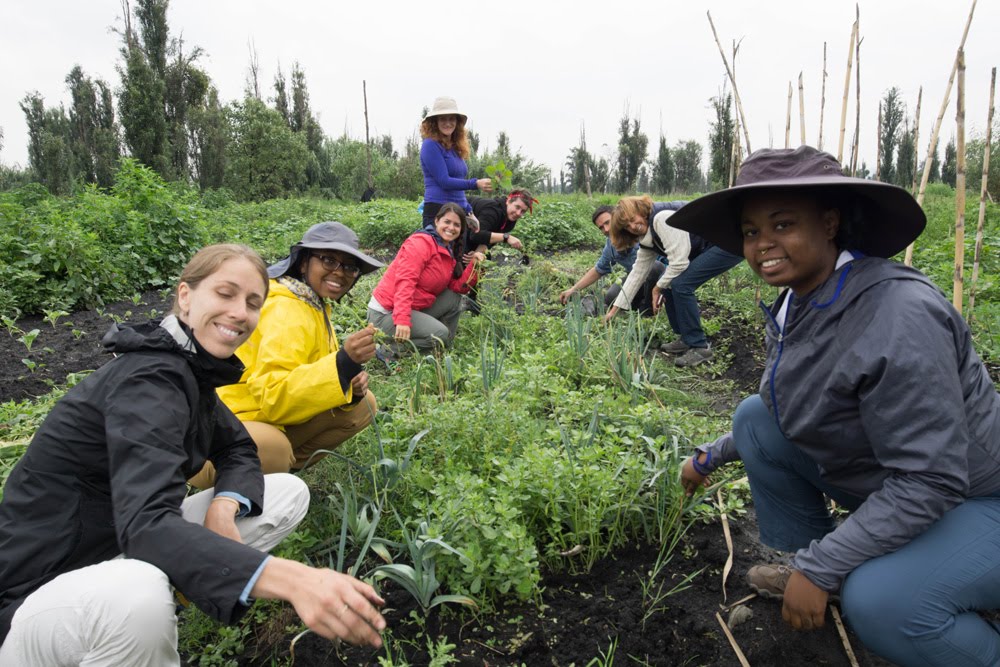
After our tour we had the opportunity to participate in gardening by turning compost and pulling weeds!
The team enjoying the beautiful garden!
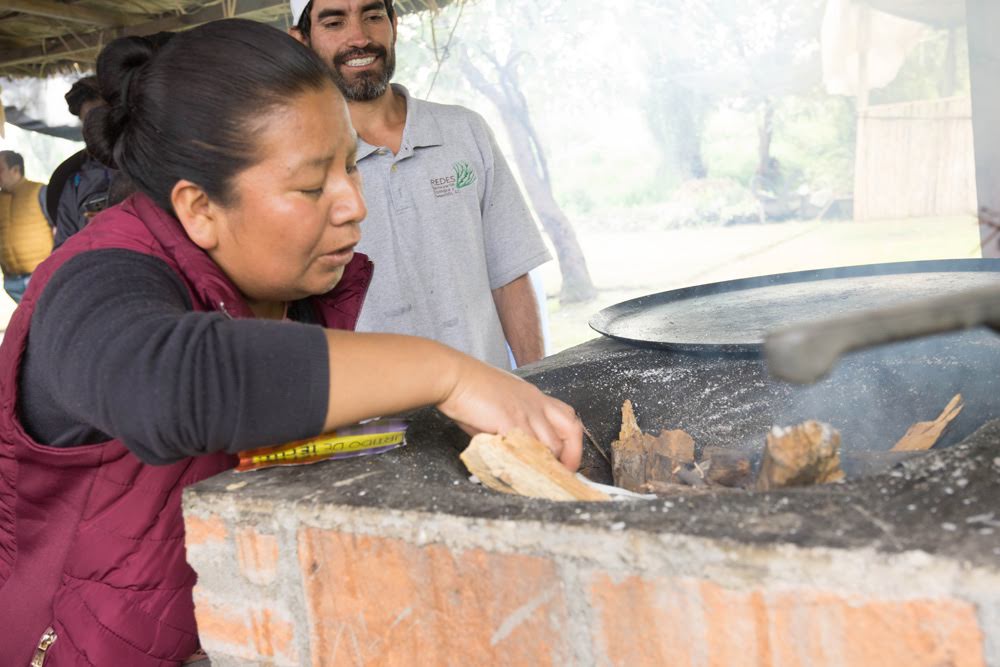
After the tour we were treated to the most delectable lunch made by local Xochimilco women using fresh produce and cooked on an open fire. It was so delicious!
Starting the fire for almeurzo (lunch).
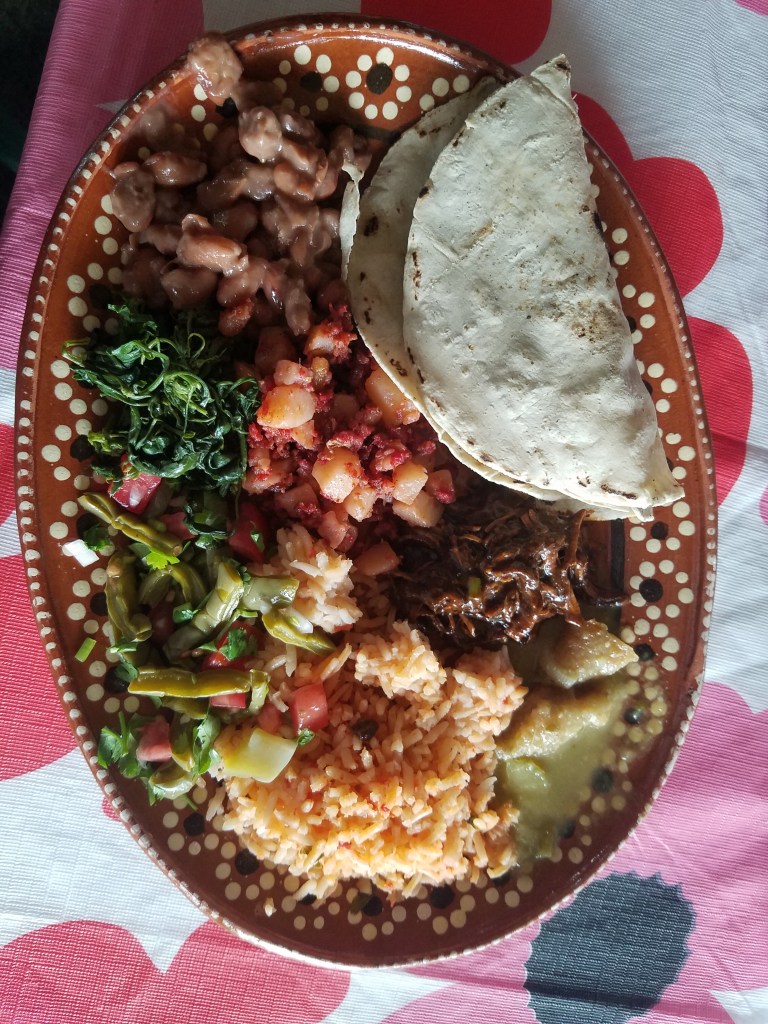
The amount of dishes was incredible
Rice, nopales, mole, chorizo with potatoes, beans were just a few of the dishes.
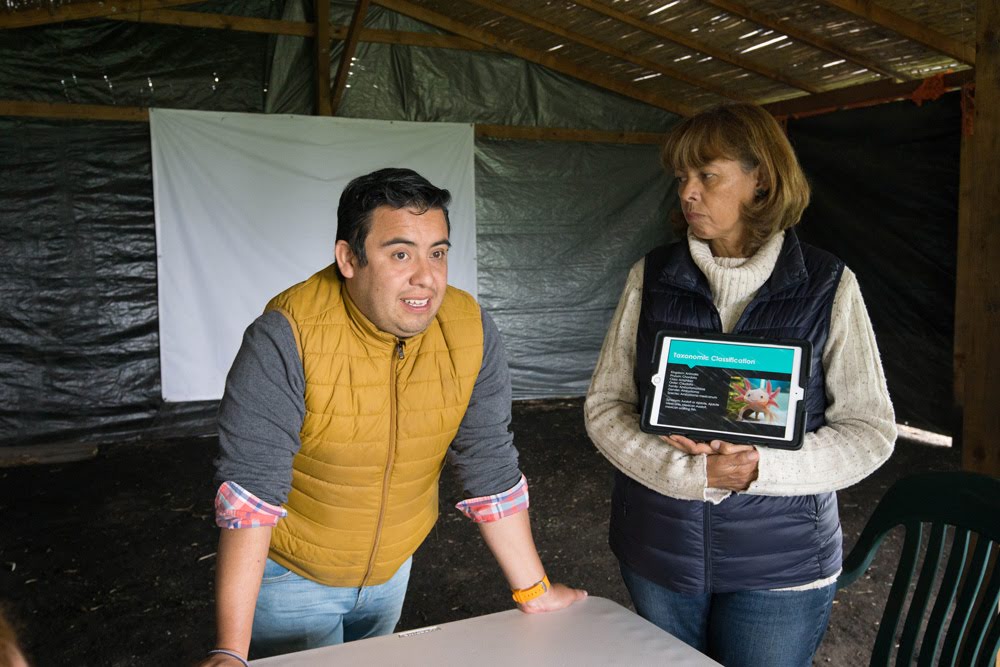
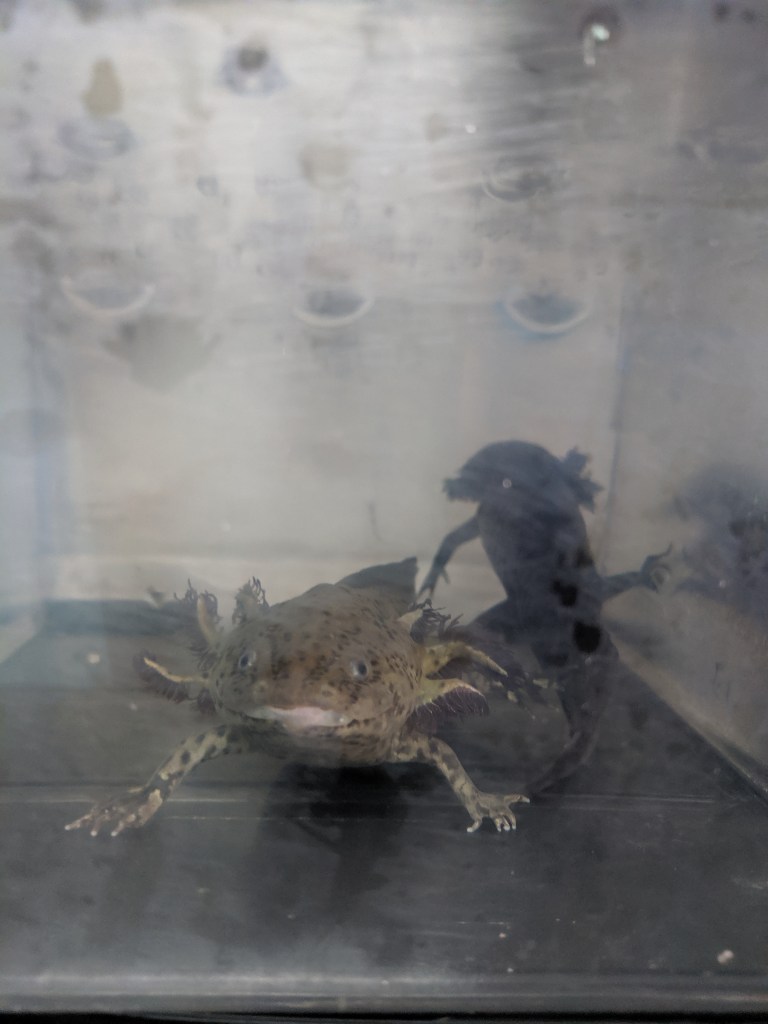
Next was a talk by Diego about the conservation of Axolotl and the importance of restoring the Chinampas and bringing back this critically endangered creature to this area. Due to the introduction of carp and tilapia the species quickly decreased in size and currently is at a critically endangered status. The hope is to block areas so that carp and tilapia cannot enter where the Axolotl are introduced. They are amazing in the fact that they can regenerate limbs and even organs and research is currently being done on their stem cells.
Diego explaining the research on the Axolotl
We had the opportunity to see them directly and got a surprise when one jumped out of the water. With Elsa’s super quick reactions it was recovered and returned to the canal.
Axolotl
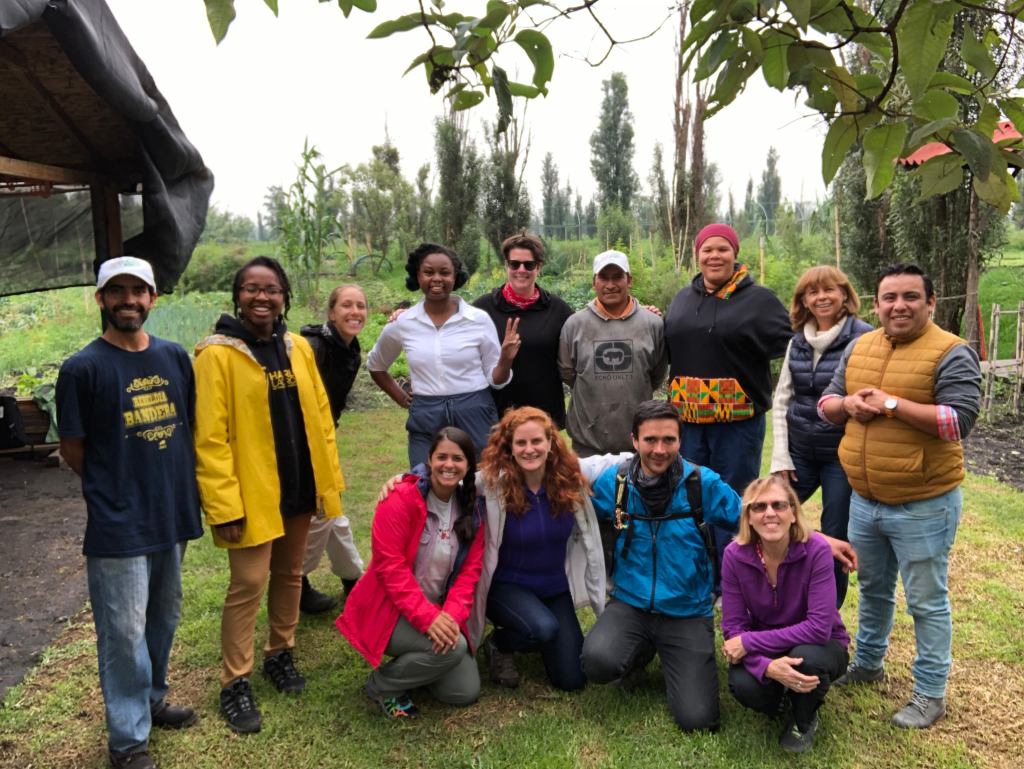
Group photo taken at the Chinampa before we head out. We will all miss the sustainable work that is being done in this area, but plan to put what we learned into practice with our students on a variety of projects.
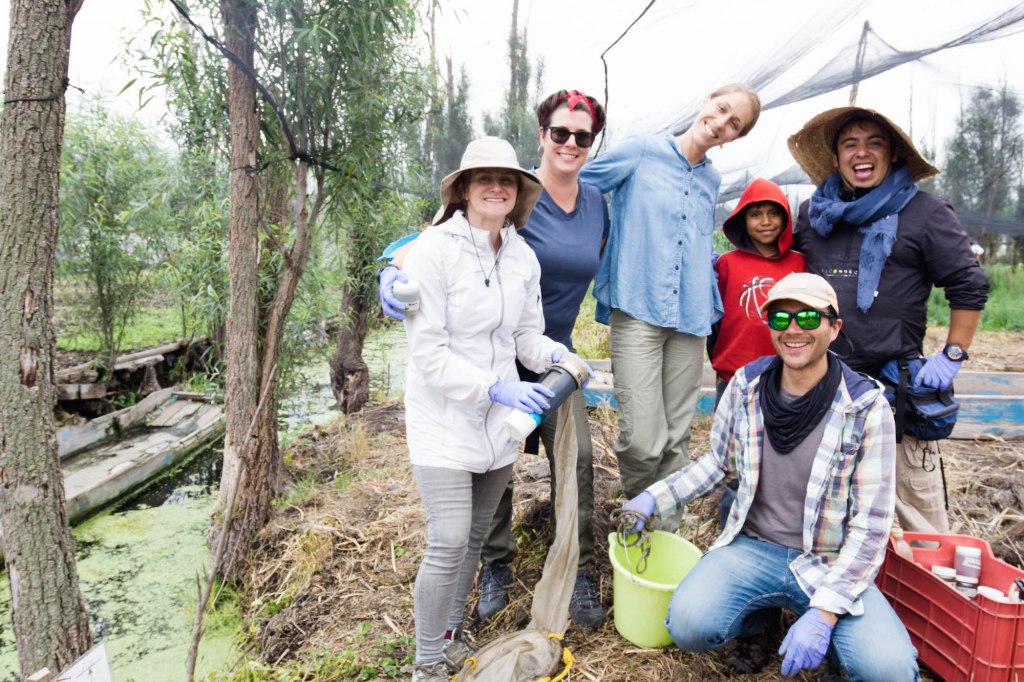
Our Earthwatch Team at the REDES Chinampa.
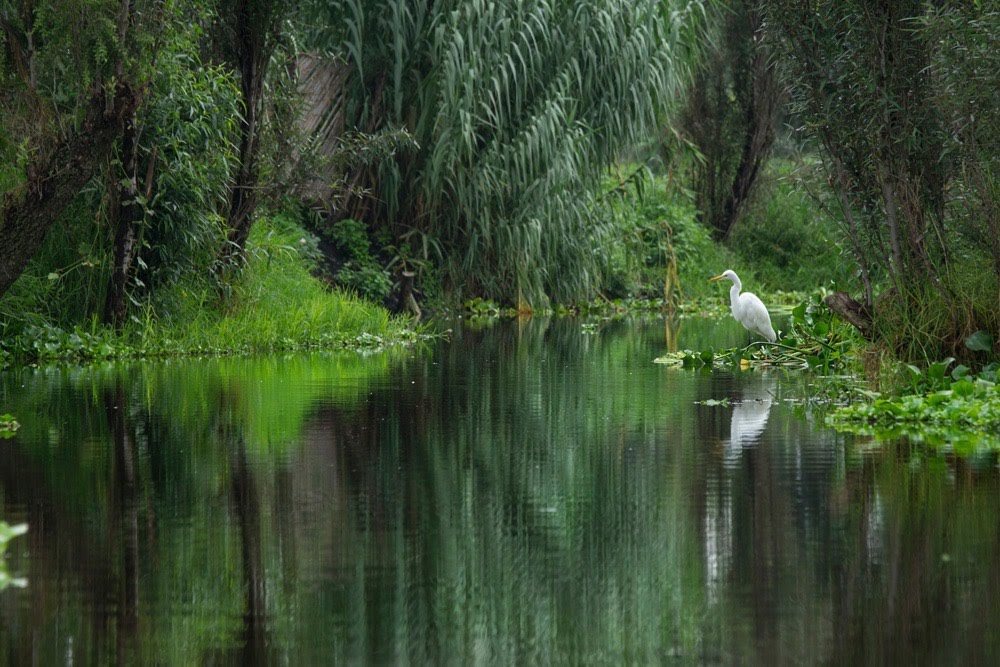
Returning back to civilization via boat gave us unbelievable views of the beauty of this area.
A Great Egret poses for us as we pass by.
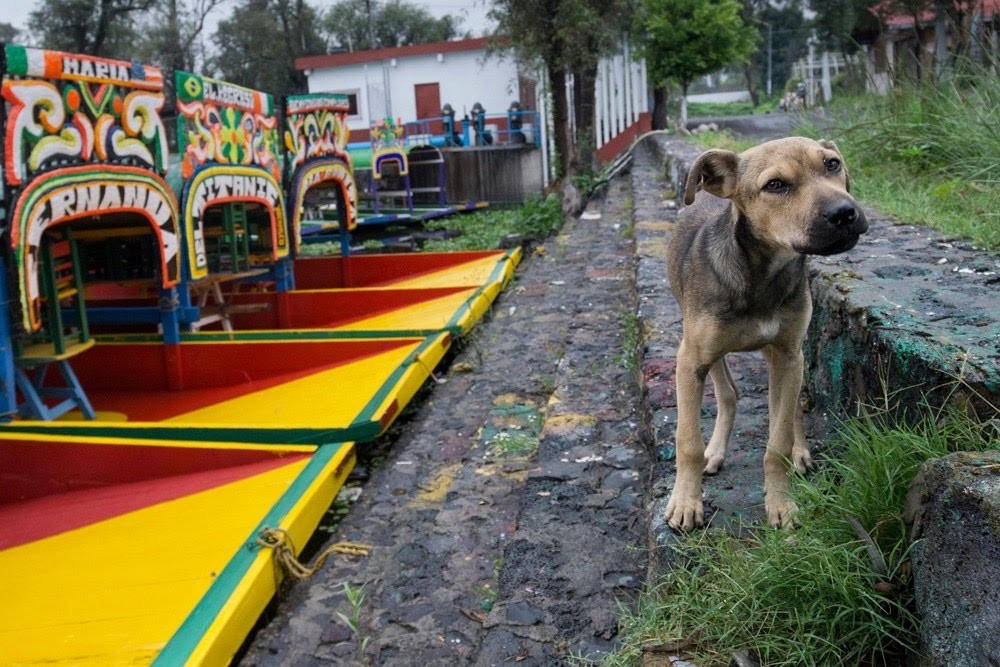
The Xochimilco boats.
The Xochimilco boats along with one of the very friendly dogs in the area.
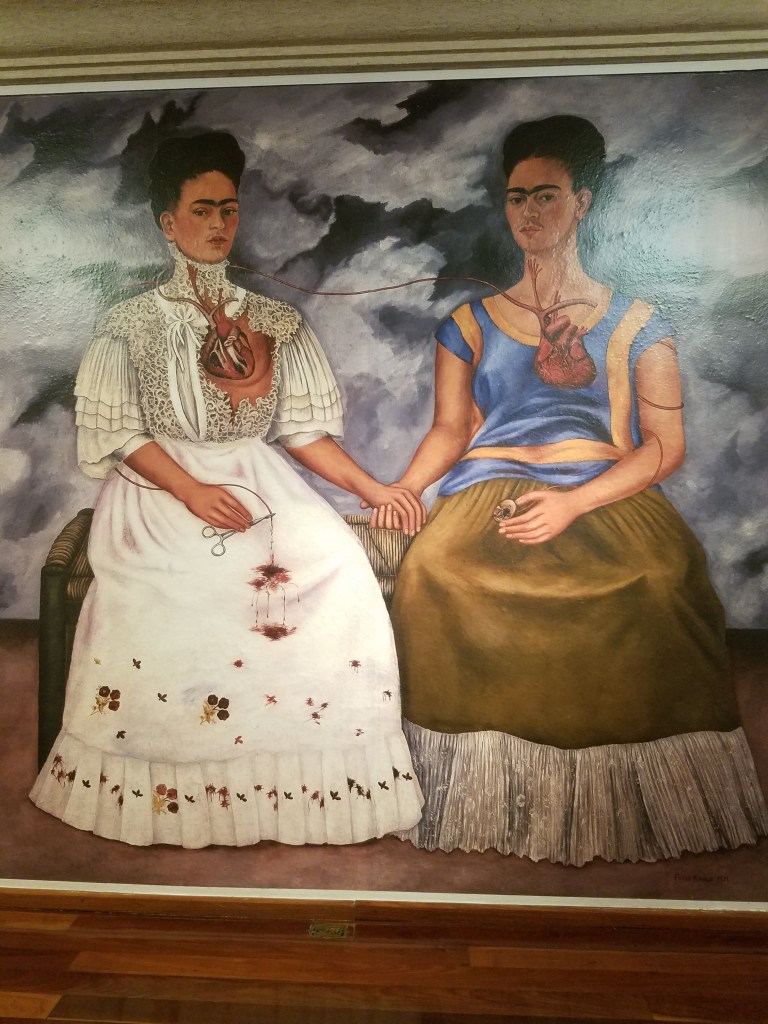
As if this was not enough, we headed to the Delores Olmedo museum in the heart of Mexico City. The beautiful grounds and art collections were magnificent. She was a friend to Diego Rivera and Frida Kalua.
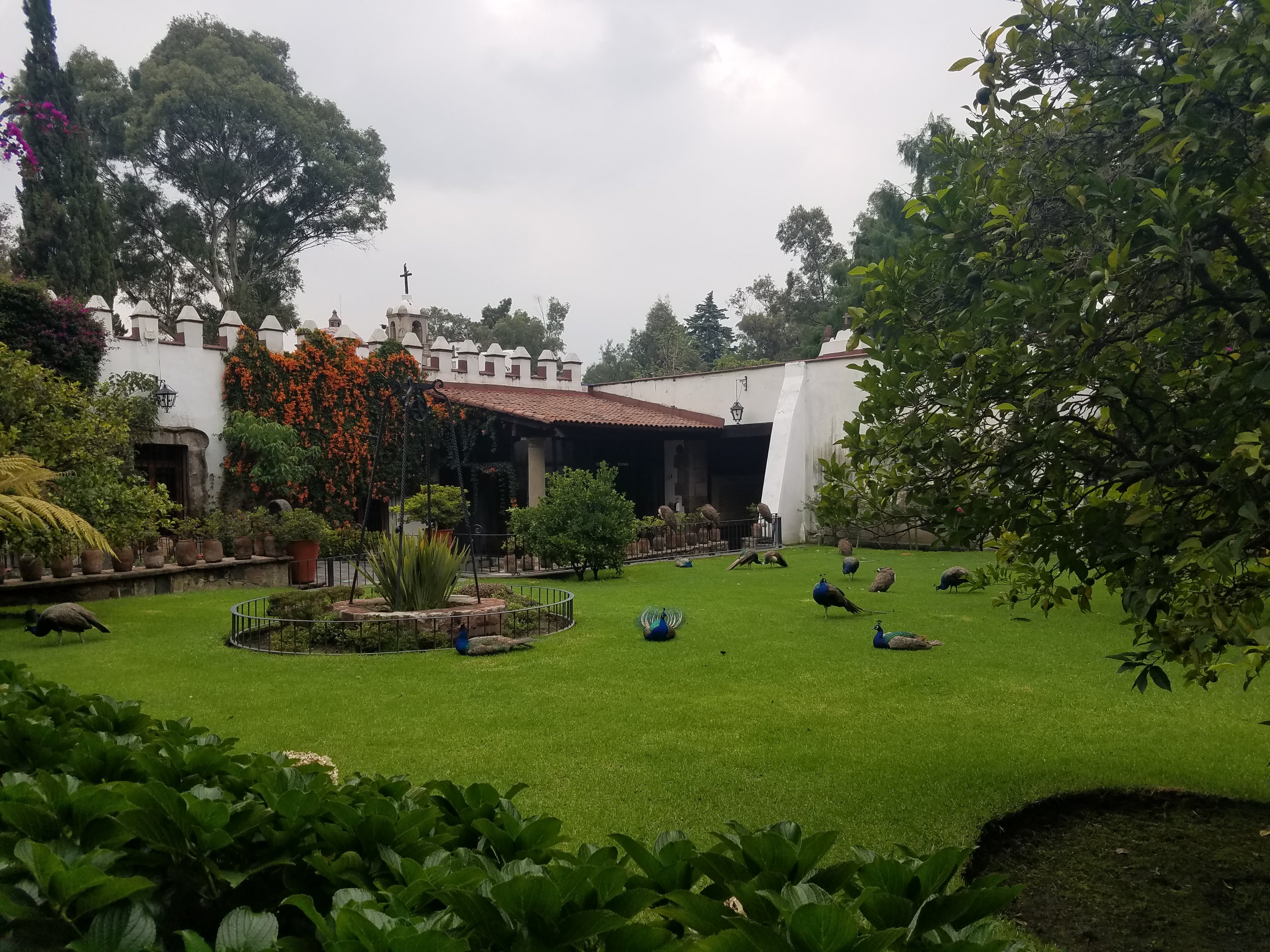
Some of the beautiful grounds at the museum with the many peacocks found throughout.
To wrap up the day we were treated to dinner at Centenari 107 and got to try crickets on guacamole! Wow what a remarkable experience with an astounding group of teachers, students, farmers, volunteers and scientists! Special thanks to Elsa and Erick for all your hard work and providing us with so many phenomenal opportunities.
Erick and Elsa – our sensational Earthwatch leaders!
From all the team – we will miss you all but learned so much! Muchas gracias por todo!
Aside from a culmination and application of our learning these past few days, today marked many things, including our comfort level with each other, loudly singing Queen’s “We are the champions” as Eduardo drove us towards the Chinampas.
We also successfully finished all of our tasks before the storm arrived, displaying our increasing comfort in collecting water samples, phytoplankton, zooplankton, Macroinvertebrates, conducting canal morphometry to name a few.
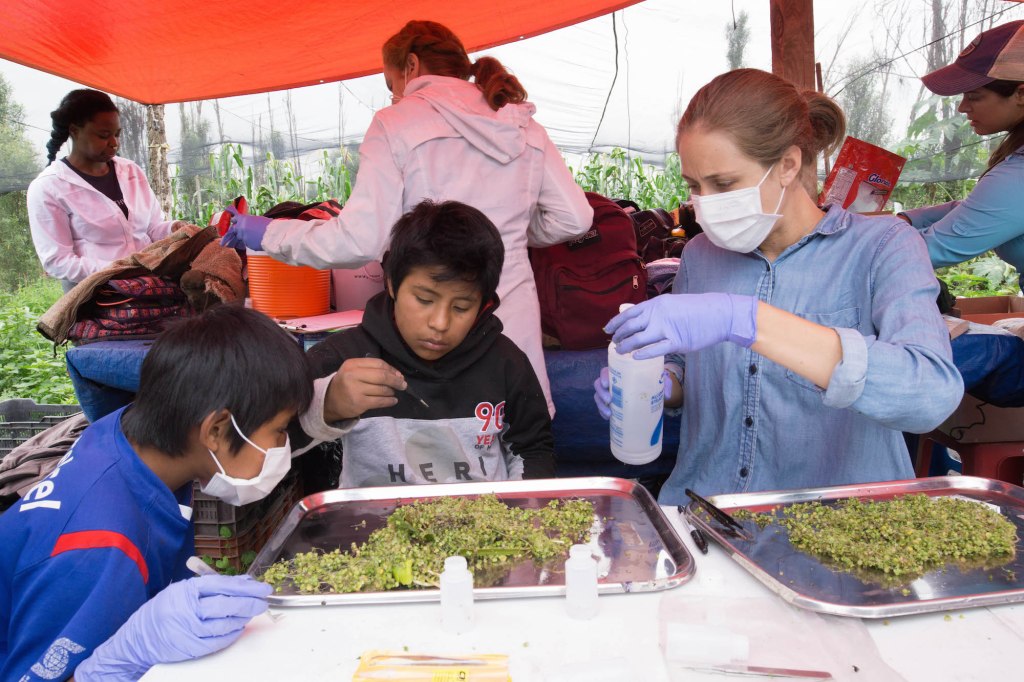
David, Juan, and Crystal closely observing and sorting out Macroinvertebrates
Highlighting memorable moments of the day:
“Seeing the two young boys, Juan and David help out and meeting Miguel, a human encyclopedia of macro-invertebrates” – Rebekah
“Trying new things, learning from Miguel, and feeling more confident in what we are doing”- Christi
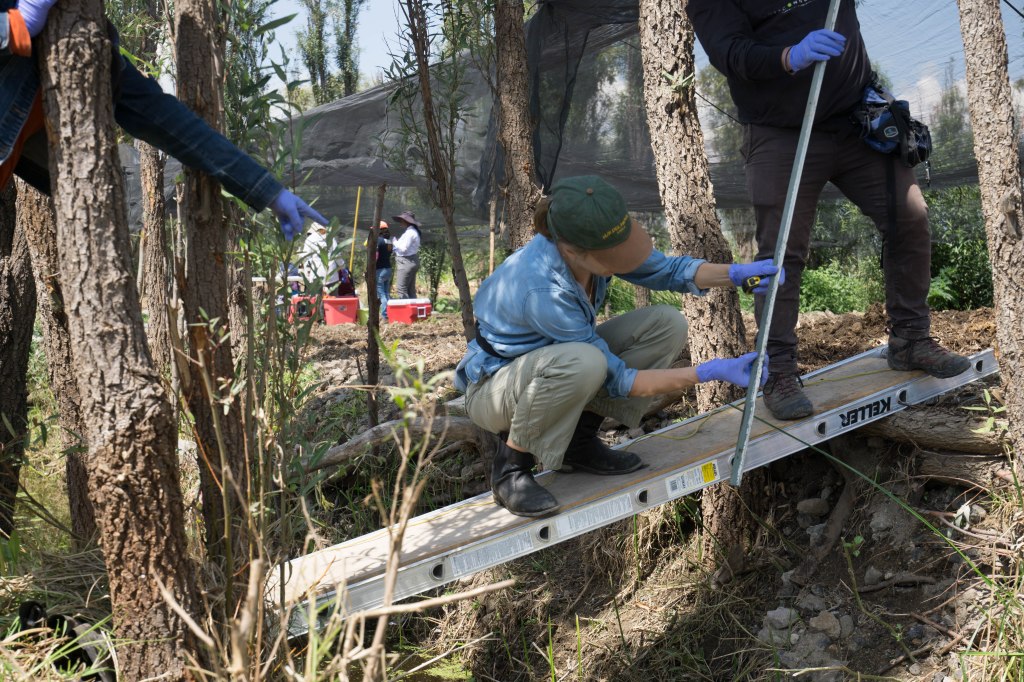
“Successfully using a wood plank as a bridge and not falling in”- Erick
“Keeping busy, lots of data entry and making sure Erick doesn’t fall in” -Holly
“Sorting with the kids, they were really cute”- Sue
“Full-on immersion, measuring the lake with Diego, Hugo and Dario”- Simone
“Filtration, everyone got into a good rhythm”- Milan
“Collecting Macroinvertebrates and Diego calling me a Pro”- Crystal
“Water sampling with Holly, Erik and Diana, and feeling capable.” – Sonya
Collecting zooplankton and phytoplankton with Diego (top right)
Our Earthwatch team of teachers will be working with Scientists in San Gregorio and Xochimilco, Mexico from July 21-27, 2019. This area is just south of Mexico City and was once part of the five large lakes that covered Mexico Valley which the Aztecs helped to settle. During this time they developed Chinampas, man-made islands within the lakes for agricultural use. These were highly productive, planting maize, beans, corn, tomatoes and other food. They also formed a system of canals to be able to move easily throughout the chinampas.
When the Spaniards came into this area in the 1500s they introduced many plants and animals. Over time the lake system was drained and currently only 2% remains. This has caused environmental pressures to the area including: untreated water, agricultural runoff, introduction of invasive species, eutrophication (increase of nutrients in the water) and pesticide accumulation.
The research will focus on the recovery of these endangered ecosystems and the canals affected by pollution and agricultural practices and work on methods to improve water quality for crops and maintaining areas for native species. As teachers we will be participating in this research and bringing back this information to our students to use in our community and hands-on lessons.
By Sue Cullumber
Day Numero Uno: July 22, 2019
¡Saludos! Wow, what a day to introduce our team to a week long of research in Las Chinampas. Excellent breakfast, interesting ride through the heart of Mexico City, with an even more excellent driver, Eduardo, who brought us safely to and from our site. With the sun shining and birds chirping, we were quickly introduced to the field of Chinampas wetland conservation research and split into three groups. Our groups focused on water physio-chemistry, soil sampling, and canal morphometry.
Water physio-chemistry focuses on PH, temperature, and the amount of bacteria and organic material found in the water. Some of the activities included taking water samples from the canal, testing the water at different depths within various locations in the canals, and using a Secchi Disk to determine water clarity.
Simone filtering water samples.
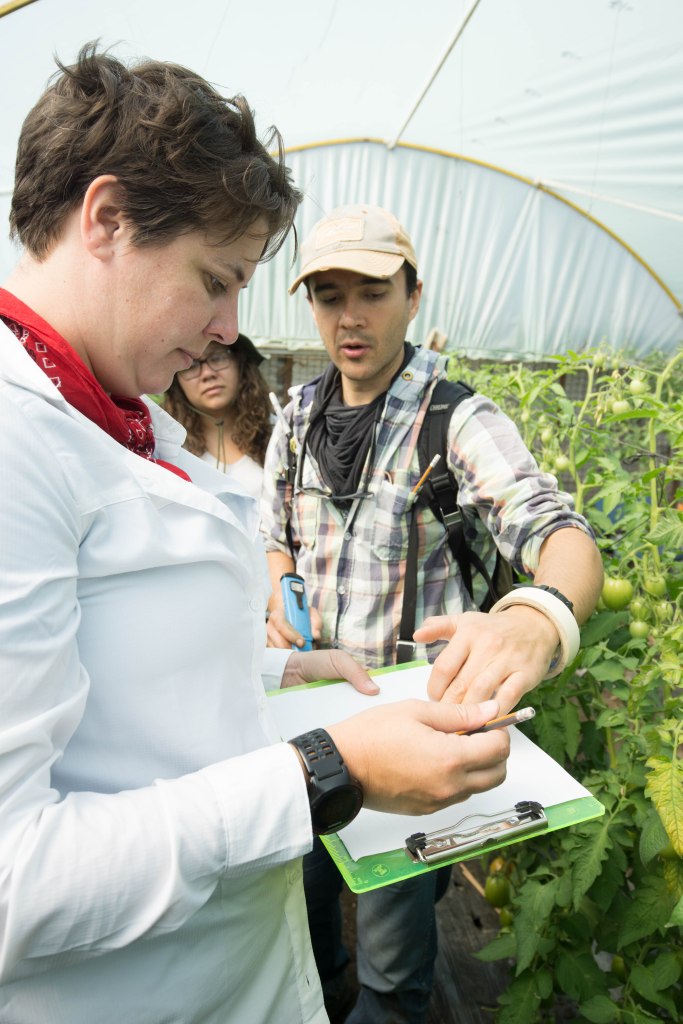
Soil sampling focused on the techniques used by farmers in the Chinampas to determine the amount of salt within their agricultural plots. The groups sampled soil from two different locations that were growing tomatoes and at each location five samples were taken by hand, placed in bags, and stored for later analysis in the lab.
Christi and Erick recording data on soil samples.
Canal morphometry focused on measuring the infrastructure of the canals, specifically the width, the depth, the flood-line indentation, and the shape of the canal bottom. The purpose of measuring is to monitor the change of the canals infrastructure over time. The groups used a ladder bridge placed across the width of the canal in order to take the needed measurements. These measurements were taken every four meters down the length of the canal.
Crystal measuring the depth of the canal while balancing on the ladder bridge.
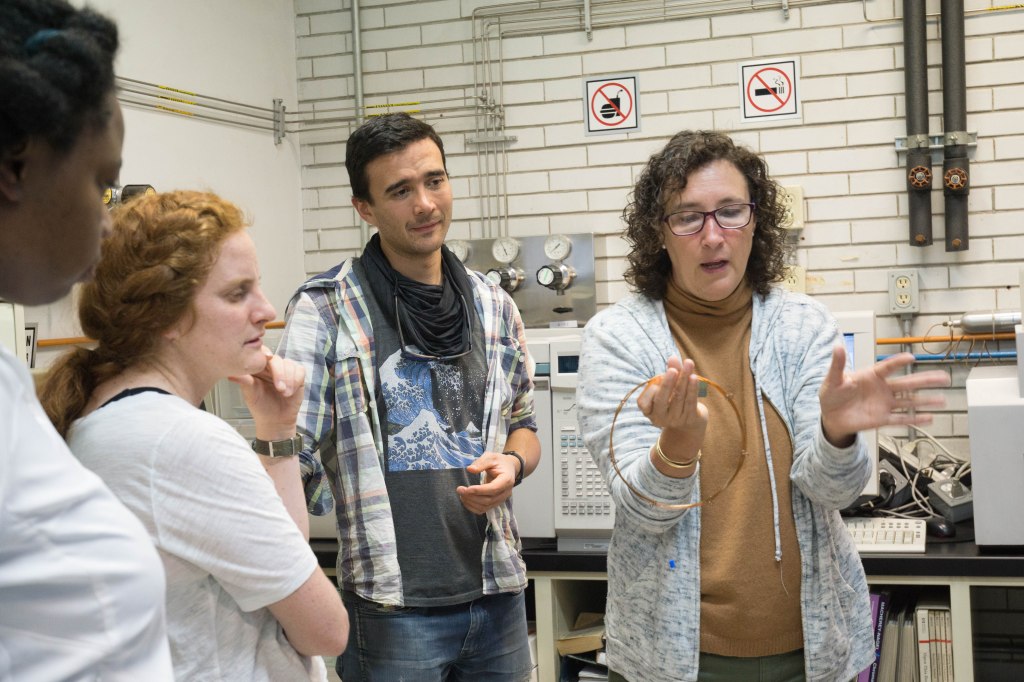
If these activities were not enough to fill our day we headed over to UNAM (National Autonomous University of Mexico) for a guided tour by the head of the research project, Dr. Claudia Ponce de León. She was incredibly well spoken, engaging, and walked us through every step of analyzing water samples. For example, one of the technologies she showed us is gas chromatography which can isolate organic matter. Also, she demonstrated another technology called the ultrasonic bath by cleaning some of our jewelry items and returning them nice and shiny, just as we concluded our tour.
Dr. Claudia explaining one of the many technological instruments used in her lab.
All in all, a very full day. ¡Saludos!
Crystal and Sue
All About Axolotl
How well do you know these creatures? Their smiling faces bring joy to countless people around the world, but our neotenous (neoteny: creatures that keep their juvenile features for longer and don’t metamorphose before sexual development) – friends are in critical danger. Their habitats though intact are changing rapidly, and are filling with competitors that are taking over their native homes. The number one threat to axolotl is the tilapia. Young axolotl lack front limbs and aren’t as efficient at getting food as the tilapia. What’s worse, they’re also less capable of defending themselves
The work being done in Dr. Ponce’s lab goes toward conserving these wetland habitat and restoring a healthy balance to the local ecosystems. With the combined efforts of scientists, farmers, conservatories and the Earthwatch teams, we hope to see an increase in the wild axolotl populations before long.
Did you know:
Axolotl eat mosquito larvae. Talk about pest control…
Axolotl prefer to eat live food and are attracted to the motion of their prey. No frozen fish for these guys.
Humans are neotenous too!
Macro-invertebrates – Day 2
Today we returned to the Xochimilco canals, this time for macroinvertebrate sampling and counting native & riparian plant species. The science team introduced us to the concept of bioindicators before dividing us into teams to get started.
How do bioindicators work?
Certain species are assigned a value, based on their tolerance of pollutants. Species that aren’t able to handle pollutants have a lower value, and the more tolerant species have a higher value. After counting the number of individuals of these species within a given location we can gauge the health of the habitat. If we have a high number of population-vulnerable species, then we know the water is good. On the other hand, if we find a large number of pollution resistant species then we know that
Another team counted the number of Riparian Zones and native vs. non-native plant species along the canals. We realized that many of the shrubs were difficult to identify because they had been cut the day before to reduce over-growth along the canal way. eventually we all found ourselves under the tent, sifting through the collected materials from the canal sample sites. This work was quite time consuming, but eventually we all found ourselves in a peaceful, focused state. It was amazing how drastically different the fauna & flora were in sites that were only a few meters apart. It’s a reminder of how small ecosystems can be, and how the slightest difference in sun exposure, temperature, or oxygen levels resulted in an entirely new combination of creatures.
Something that caused a bit of controversy among our team was the method of sorting that was used. In order to get an accurate count and properly identify the invertebrates we found, we had to find a way to keep them separate and still. We put each individual insect into a bottle partly filled with alcohol in order to euthanize them. At first it seemed counterproductive to kill organisms in the process of conservation, but the results of this research goes toward a greater good.
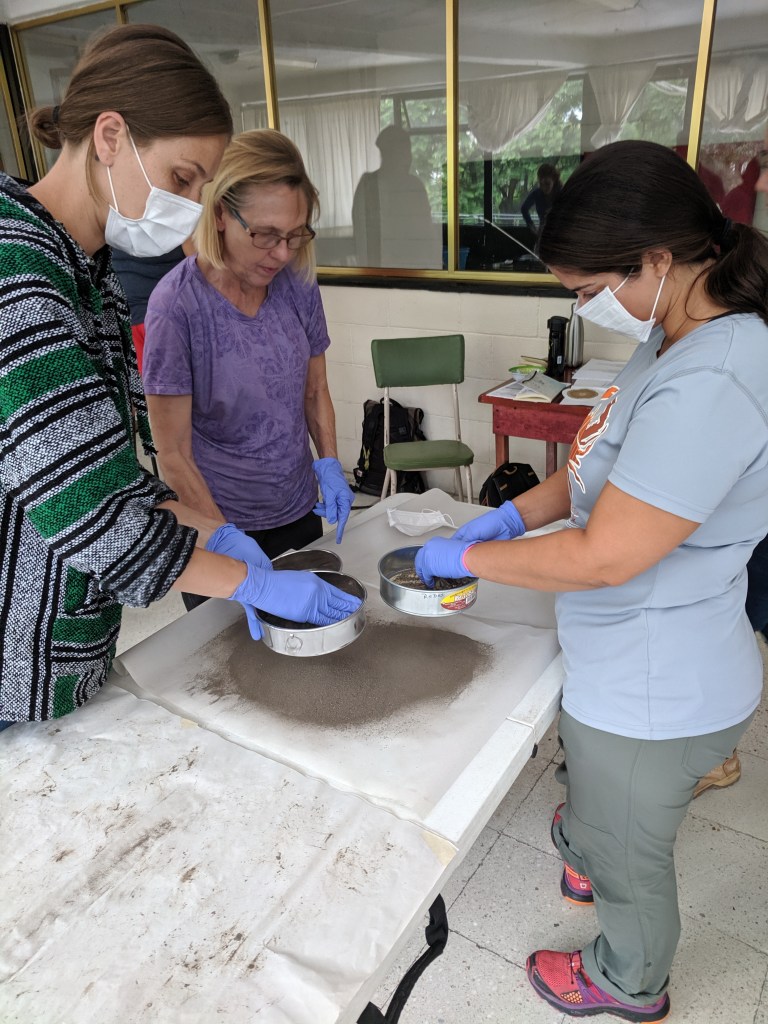
Finally we took soil samples from two different greenhouses and brought them back to Casa Xilta for Soil Chromatography in the afternoon. There was much wait time and swirl time of soil samples….as we wait to complete the process tomorrow morning and compare greenhouse soil samples in two different locations of the Chinampas!
Until tomorrow,
Milan and Holly
Continuing Questions:
What do you think about this method of obtaining information?
How many riparian species are in your neighborhood or local park.







 Conserving Wetlands and Traditional Agriculture in Mexico