Why Use Soil Chromotography?
In short, Pfeiffer’s Chromotography is a process used to study the organic matter in the soil and the soil’s quality. In this particular project, it is useful because it is easy, cheap, and highly informative. Farmers in Xochimilco can easily test their own soil using these methods and monitor the health of their soil. The team at REDES use Chromotography to diagnose and monitor the chinampas; they can see the difference between varying chinampas or study the changes of one chinampa over time. Using Chromotography, the researchers can see what processes and changes work on the chinampas, and what processes are less successful.
Armed with this data, the scientists can then give farmers suggestions about strategies that produce more crops, healthier soil, as well as see if what appear to be successful methods are only a short-term solution or if they are sustainable for the long-term. This type of analysis also gives farmers more autonomy. Inspired by Brazil’s Muvimiento de los Sin Tierra (MAST) (also known as the Landless Workers Movement), Xochimilco farmers can make informed decisions about their own crops rather than having to rely on the government to process soil samples (which are very expensive) or large multinational corporations.
How to do Soil Chromotography
While the process is relatively simple (and beautiful), it does require quite a bit of preparation. On Monday we took soil samples from Luis and Guillermo’s greenhouses and dried them overnight. Tuesday night we split into three teams (Soil, Solution, and Paper) to prepare the materials we would need today. We sifted and ground the dried soil samples from Luis and Guillermo’s farms and mixed them with a sodium hydroxide solution. We gently stirred them at timed intervals (15min, 30min, 1hr) and then allowed them to sit overnight. We also prepared wicks and used them to treat small papers with a sodium nitrate solution.
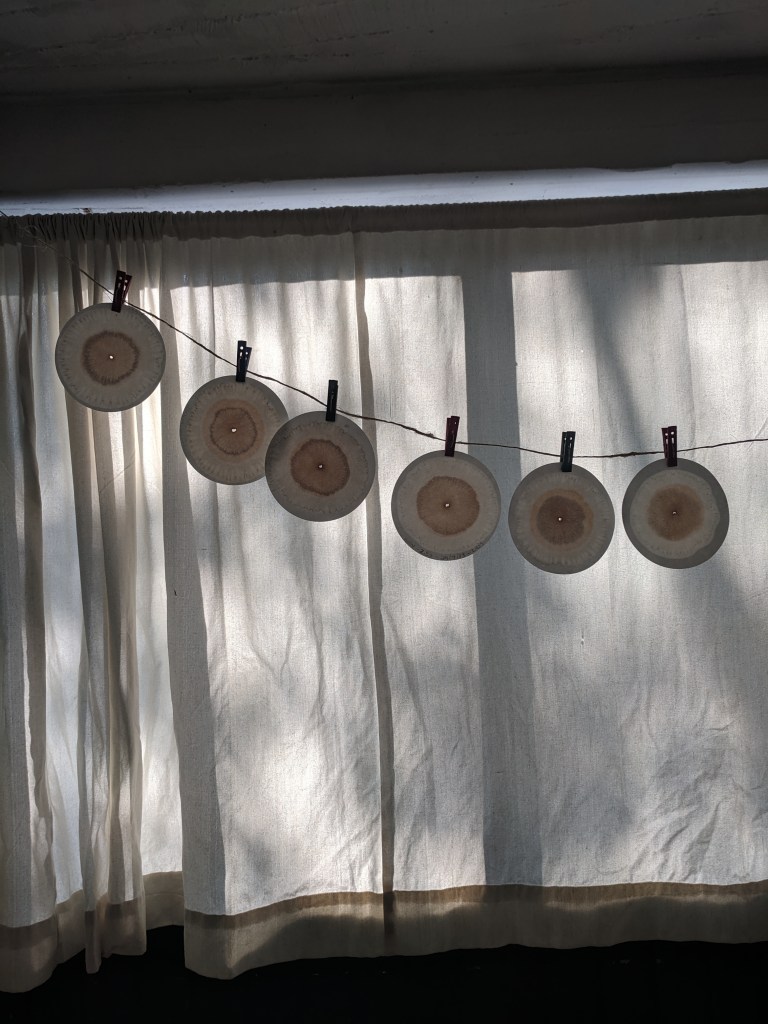
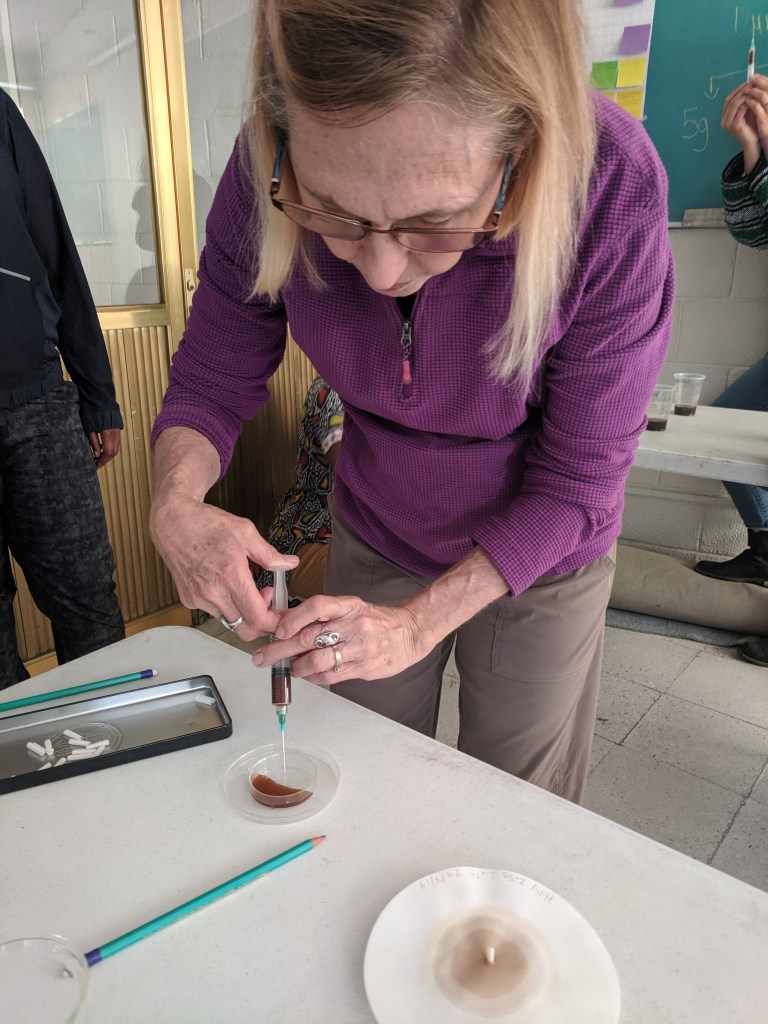
After breakfast, we used syringes to take liquid from our soil solutions that had rested overnight. We put the liquid into petri dishes, put wicks through our papers prepared with sodium nitrate, and allowed the papers to absorb the soil sample using capillary action. Once the paper was sufficiently saturated, we removed the wicks and hung the paper to dry. We’ll allow the samples to dry fifteen days before Yolo, Luz, Dani and Erik interpret the results.

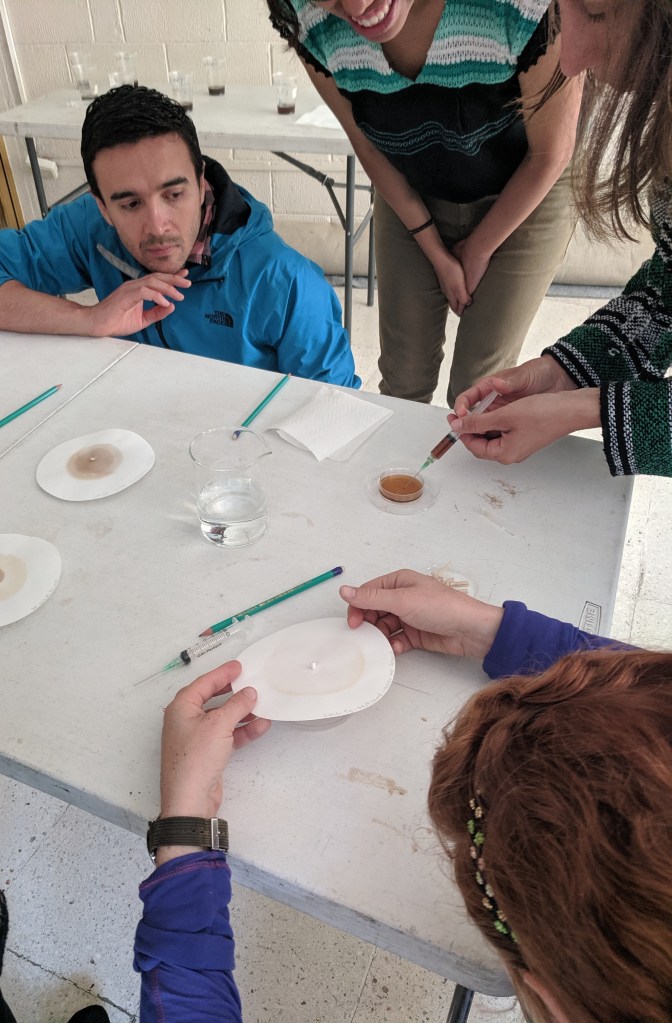
Erik admires Crystal and Rebekah’s excellent work.
Our awesome team of scientists then gave us a presentation about the process of chromotography, how they use it, and the conservation strategy for Xochimilco’s wetlands, farmers and chinampas.
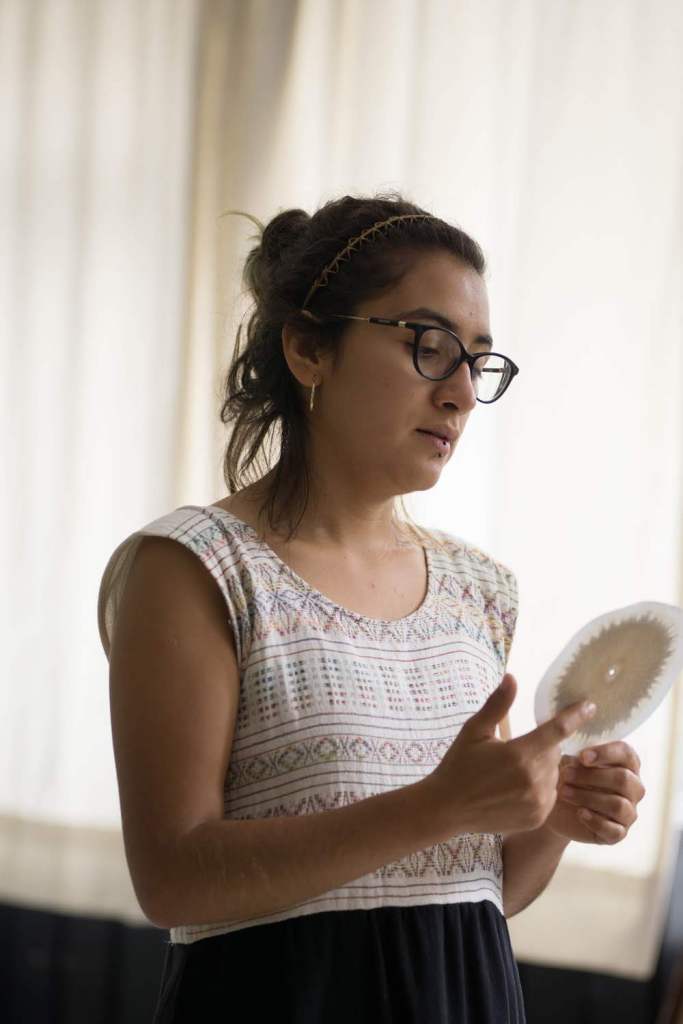
In her research, Yolo has found a statistically significant correlation between a high amount of colors with a low content of moisture, high density and low microbiological activity. She also found a low fractal dimension correlates to low microbiological activity.
FUN TIME
After a morning of chromotography, we piled into the van and headed to Cuicuilco to see the pyramid. This settlement dates back to 1400 BC and was destroyed by lava flow from the nearby volcano Xitle. The pyramid is located in the middle of the city not far from UNAM and so you get an incredible 360 view of the city and surrounding mountain ranges.

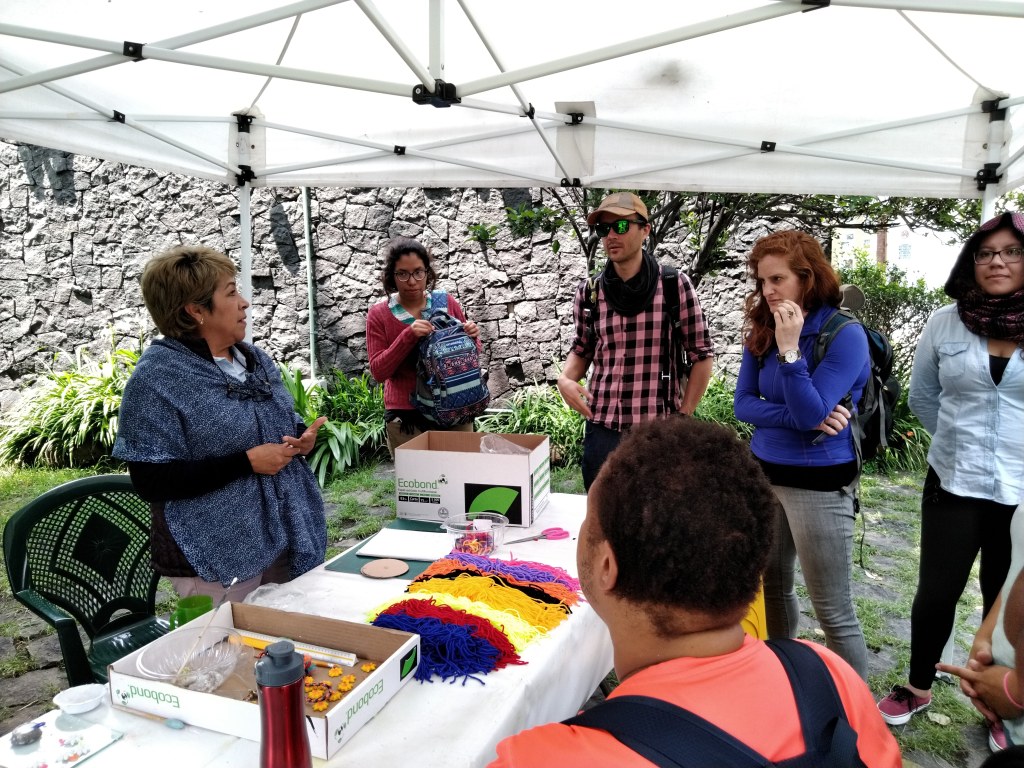
As we walked through the park (?) we noticed a woman sitting under a tent giving a presentation to some children. When we walked over she shared with us the different flowers that are native to Mexico and how these vibrant flowers can also be consumed! We took part in an activity where we created braided bracelets out of yarn, the colors of which were meant to represent the vibrancy of Mexico’s fauna. While making our bracelets we learned about other ways we can incorporate art and culture into our classrooms, it was a very cool bonding experience for us as a group.
Lunch and Afternoon Workshop
We came back to Casa Xitla and were met with an amazing lunch of tortilla sopa, fish, rice, salad, and tortillas. After lunch Erik and Elsa continued to share with us the history of the chinampas, the environmental implications of large scale farming, and how the community at large MUST take part in their preservation for the better of all in Mexico City. Finally Sue led a teacher workshop which brought us closer to solidifying our community action/lesson plans which detail how we will bring back our experience and spread awareness of environmental issues with our own students, schools, and communities!

 Conserving Wetlands and Traditional Agriculture in Mexico